How Live Futures Day Trading Works in 2026 With Prop Firm Capital
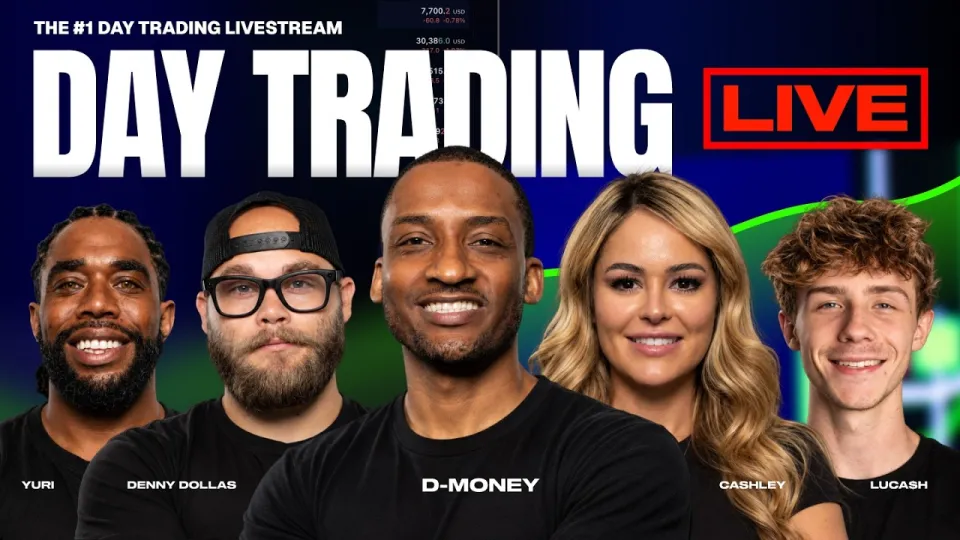
Video: LIVE DayTrading! #1 Watched Futures Trading Show!
Want articles like this for your own video to promote it on YouTube and Google? Order them through the Telegram bot @sat_sit_bot. Articles with your video embedded are written and posted by the bot itself — on popular topical sites (no ads). Try it free: 50 articles on us.
· based on the channel Patrick Wieland
Key takeaways
- Live futures day trading means executing index and commodity futures trades in real time during the US session, usually on micro contracts like MES, MNQ and MGC.
- Most retail day traders now trade prop firm capital instead of their own: they pay a one-time evaluation fee and keep 80-90% of profits on a funded account.
- Popular funded futures programs include Apex Trader Funding, TakeProfitTrader, Topstep, Tradeify, MyFundedFutures, TradeDay and Legends Trading.
- A funded account is not free money: daily loss limits, trailing drawdown and consistency rules can end the account before a payout arrives.
- Patrick Wieland streams live futures trading every trading day from the BDH desk and sells a $99 two-hour course explaining the strategy he trades on stream.
Live futures day trading is the practice of buying and selling futures contracts such as ES, NQ, MES and MNQ in real time during the US cash session, and in 2026 most retail participants do it with capital rented from a prop firm rather than their own savings. A trader passes an evaluation, receives a funded account, and splits profits with the firm, typically keeping 80-90%. The live format matters because entries, exits, sizing and drawdown decisions happen in seconds, not after the close.
What live futures day trading actually involves
Live futures day trading is a real-time execution activity, not a long-term investment approach. A trader watches a small set of instruments, waits for a repeatable setup, and manages the position with a hard stop and a defined target.
The mechanics are simple, the discipline is not:
- Choose one or two instruments. The most liquid micros are MES (S&P 500), MNQ (Nasdaq 100), MGC (gold) and MCL (crude oil). Micros let you trade the same chart as the full-size contract with one tenth of the tick value.
- Define the session. Most futures day traders work the New York open, roughly 9:30 to 11:30 ET, when volume and range are highest.
- Set a daily loss limit before the first trade, not after the third loss. A common rule is stopping at 2-3% of account equity.
- Size from the stop, not from the target. If your stop is eight ticks and your risk budget is $160, you trade two micros, not ten.
- Journal every trade with entry, exit, size and reason. Without that record there is no way to tell skill from a lucky week.
Why prop firm capital dominates retail futures trading in 2026
Prop firm capital dominates because it lets a trader control size far beyond their own balance while capping the downside at the evaluation fee. Instead of funding a $50,000 personal account, a trader pays a few hundred dollars, proves consistency on a simulated or live-sim environment, and then trades the firm's money.
The trade-off is a rulebook. Funded futures accounts typically include:
- A profit target during the evaluation, often $3,000 on a $50,000 account.
- A trailing or end-of-day drawdown limit, which moves up as the account grows and never moves back down.
- A daily loss limit that locks the account for the rest of the session when hit.
- A consistency rule, meaning no single day can represent too large a share of total profit.
- A payout schedule, commonly the first payout after five to fourteen trading days, then every two weeks.
Firms frequently named in this space include Apex Trader Funding, TakeProfitTrader, Topstep, Tradeify, MyFundedFutures, TradeDay, BluSky Trading and Legends Trading. Rankings, discount codes and side-by-side account comparisons are aggregated on sites such as OnlyPropFirms.com.
Funded account rules that end most evaluations
The rules, not the market, are what end most evaluations. A profitable strategy with the wrong position size still blows the account, and that failure usually happens in one or two sessions.
The three failure modes worth understanding before buying any challenge:
- Trailing drawdown. On a $50,000 account with a $2,000 trailing threshold, the floor rises with your highest unrealized balance. A $1,500 winner followed by a $1,200 loser can breach the limit even though the net result is positive.
- Overnight and news restrictions. Many firms forbid holding through the daily close or trading inside a two-minute window around major economic releases. A single violation can void a payout.
- Payout eligibility. Some programs require a minimum number of trading days, a minimum winning-day count, or a cap on contracts held at the open. Reading the contract before paying is cheaper than learning it after a good month.
A practical habit: write the drawdown floor, the daily stop and the maximum contract size on a sticky note next to the monitor. If the number is not visible, it is not a rule, it is an intention.
What live trading streams add that a recorded video cannot
A live trading stream shows the parts of the process that edited videos cut out. That includes waiting, skipped setups, position sizing decisions, and how a trader behaves after two consecutive losses.
Patrick Wieland runs one of the most-watched live futures shows, broadcasting from the BDH trading floor with a crew that includes Damareous Young, Lucas Kennard and Denny Jones. The format combines real-time market analysis, prop firm reviews, giveaways and discount codes, and it airs every trading day rather than once a week. For a viewer, the useful part is rarely a single call. It is the routine: how the session is framed, where risk is defined, and how the day is closed out.
Wieland also sells a two-hour course for $99 that explains the strategy he trades on stream, which answers the most common viewer question about where the setups come from.
Copy trading and signal following in practice
Copy trading looks like a shortcut around the learning curve, but it moves the risk rather than removing it. A follower inherits the leader's drawdown, timing and instrument selection without inheriting the same account size or risk tolerance.
Before copying anyone, check four things:
- Verified track record length. Thirty days of screenshots is marketing; a year of audited fills is data.
- Maximum drawdown, not just win rate. A 90% win rate with one catastrophic loss is a losing system.
- Position size relative to the follower's account. A leader trading ten contracts on a $150,000 account is not replicable on a $5,000 account.
- Cost structure. Subscription fees, profit splits and slippage all reduce the edge that looked attractive on a chart.
For most beginners, the better use of a live stream is education: watch the decision process, then replicate it on a demo account until the execution is boring.
Common questions from live trading viewers
Viewers of live futures shows tend to ask the same things, and the honest answers are less exciting than the marketing. The most frequent question is which setup is being used, and the answer is usually a small number of repeatable patterns applied to the same instruments every day, not a secret indicator.
The second most common question is where to buy that setup. That is a business question, not a trading question: some educators sell a course, some sell a Discord, some sell nothing and monetize through prop firm affiliate links. Knowing which model you are looking at tells you how to weigh the advice.
The third recurring theme is account size. A viewer watching a $150,000 funded account take a $2,000 profit will often try to reproduce it on a $10,000 account and fail, because the same contract count represents ten times the relative risk. Scale the position to the account, never the account to the position.
Conclusion: what separates a working routine from a highlight reel
Live futures day trading in 2026 is a rules business before it is a prediction business. The traders who last are the ones who define risk first, trade one or two instruments, respect the drawdown floor and treat payouts as the scoreboard rather than the goal. Prop firm capital makes larger size accessible, but it also makes rule violations expensive, so the contract matters as much as the chart.
Live shows are a legitimate way to study the routine, provided you watch the process instead of the outcome. Patrick Wieland's daily broadcast from the BDH desk is one of the longest-running examples in futures, and it is most useful when treated as a case study in execution rather than a source of signals. Start on a demo, trade micros, log everything, and only add size when the process survives a losing week.
Source: LIVE DayTrading! #1 Watched Futures Trading Show! · Markdown version
Questions & answers
What is live futures day trading?
It is buying and selling futures contracts such as MES, MNQ or MGC in real time during the US session, with positions opened and closed the same day. Traders use micro contracts to keep risk small while trading the same charts as the full-size instruments.
How do prop firms make funded futures accounts profitable for traders?
A trader pays an evaluation fee, hits a profit target under a drawdown limit, and then trades firm capital while keeping roughly 80-90% of profits. The firm earns from evaluation fees, resets and its share of gains, while the trader's downside is capped at the fee.
Where can I find the setup a live futures trader uses?
Many streamers explain their entries on air and some sell a paid course or community that documents the rules. Before buying anything, confirm whether the educator earns from prop firm affiliate links, since that shapes what gets recommended.
Can I copy a profitable futures trader and skip the learning curve?
Copy trading transfers the leader's drawdown and sizing to your account, which rarely matches your balance or risk tolerance. Check verified track record length, maximum drawdown and cost structure, and treat live streams as education rather than signals.